



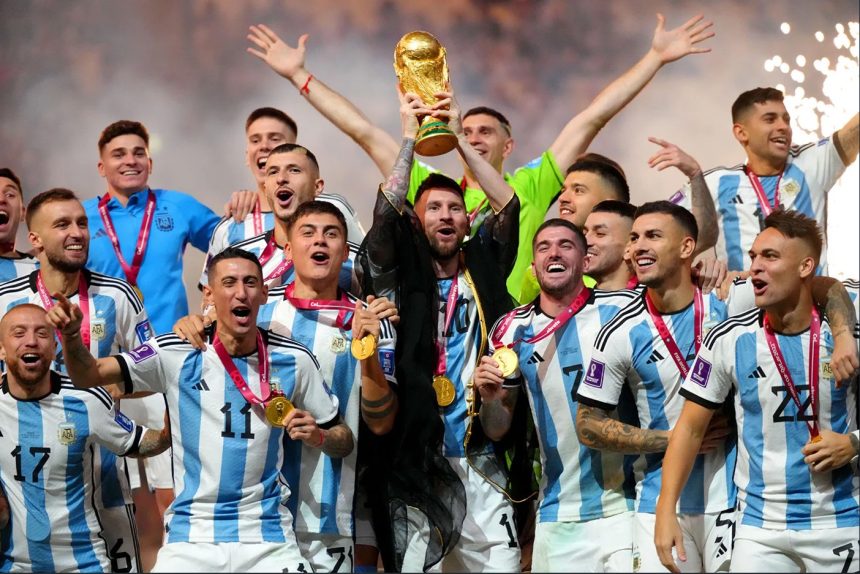
It is not only about the number of medals to be won or the arena to be filled. The real sporting countries are the countries where sport is a daily concern. Where people actually do not only watch at a distance–but play, debate, bet, coach, organize, and even to the tiniest levels.
The statistics speak the truth. The number of people attending the stadium, the hours on the internet watching, wagering on the matches, the level among other people, all this, when published together, shows something other than just a successful strategy: cultural saturation. And there are big countries and little countries that are breathing and living sport in a way that is literally unbelievable.
Population Obsession: Nations Where Sport Is a Way of Life
The global sporting world is changing. No star is gauged solely on the size of the TV audience or number of transactions at the box office, but they also cover livestreaming, fantasy activities, operational tactical watch-and-wager, and mobile micro-betting. The countries that are at the top of this new world are not always the wealthiest or the most profiled, but rather the ones that are the busiest.
Take India, for instance. Although cricket remains right at the top of the pyramid, there is an increased presence of digitalization that has widened the scope. In cities like Mumbai and Bengaluru, fans now consume analytics-based coverage of football, kabaddi, and even esports. The data shows a marked increase in dual-screen behavior, where fans stream a match while interacting with stats or placing wagers through an online betting app in India mid-game, enhancing their immersion through real-time decisions and feedback. Beyond top-level matches, second-tier leagues are seeing growing attention thanks to streaming and betting overlays.
They have provided several camera angles, fan commentary, and tactical observations in real-time, even when it comes to a local derby on the platforms. This not only enhances the experience but also increases the scope so that even the smaller leagues are discussed on the global sporting platform.
Five Most Engaged Countries by Population Ratio
In order to come up with which countries are the most sporting, we utilised five pillars: stadium attendance per capita, participation and involvement in organised sport, national watch rates, betting and fantasy sports activity, and social media engagement with official leagues.
One of the standout examples in recent years is Iceland, where nearly a fifth of the population is registered in amateur football or handball leagues. Meanwhile, Japan continues to lead in digital viewing hours per capita, not only for baseball but increasingly for football as the J-League expands into Asia-wide streaming deals.
| Rank | Country | Live Attendance (per capita) | Registered Athletes (%) | Avg. Weekly Viewership | Key Cultural Trait |
| 1 | Iceland | Exceptionally High | 17% | 84% | Grassroots-first football system |
| 2 | New Zealand | Very High | 16% | 79% | Rugby at every level |
| 3 | Norway | Moderate | 18% | 76% | Strong youth and club pipeline |
| 4 | United Kingdom | High | 14% | 82% | Saturated football and pub culture |
| 5 | Japan | Moderate | 11% | 83% | Discipline, data, and loyalty |
This list is based on participation rather than medals. Iceland has a small population, but its participation rate is impressive. Japan might not have the stadiums filled to the brim like Brazil, but their viewership is considerable. Millions watch and engage with J-League analysis and preseason game highlights on YouTube. Grassroots football is on the rise in Norway, and it’s not only limited to skiing anymore; over the past three years, attendance at lower-division matches has grown by 22%.
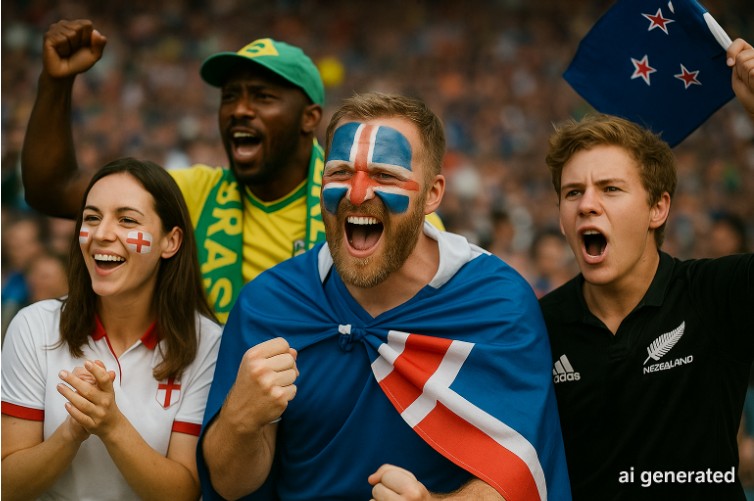
Digital Sport: The New Benchmark for National Engagement
One of these aspects that is increasing on phones rather than on stadiums is fan engagement. Fantasy leagues, livestream stats, AI-powered analysis, and app-integrated betting have changed how fans engage with or without a TV screen.
In Brazil, Copa Libertadores matches are now streamed with optional xG overlays and live chat commentary. In India, similar features are being built into regional cricket coverage. One platform powered by Melbet India recently introduced a momentum prediction tool during IPL playoff games, which increased app retention and bet volume by over 30%. It’s not just functionality—it’s part of the experience.
These trends are particularly prominent in countries where physical infrastructure is still catching up. Instead of attending matches, fans build rituals around digital presence—Discord servers for tactical breakdowns, Telegram channels for lineup leaks, and YouTube replays watched communally in dorm rooms and office lounges. As costs for mobile data continue to drop, this behavior is set to expand even further.
What Defines a “Sporting” Population?
In order to understand countries with a well-established sporting culture, we went beyond streaming numbers. Here are some traits that consistently show up in countries with high engagement levels.
Common traits across top sporting nations:
- Local-level leagues and public access: Pitches, courts, and halls aren’t reserved for professionals. Open community infrastructure fuels wider participation.
- School-to-club pathways: Youth players know where they’re headed. This builds long-term engagement and trust in the system.
Cultural identity linked to sport: In places like New Zealand or Argentina, sport isn’t a hobby—it’s part of national self-image.
Local heroes also play a critical role. In Norway, kids idolize their local semi-pros as much as national stars. In India, IPL rookies often become community legends before they hit international caps. The presence of relatable athletes, accessible matches, and shared community goals enhances emotional investment, which in turn boosts long-term engagement.
The Countries Catching Up Fast (Digitally)
Some nations are not there yet in person, but they are advancing rapidly in the digital realm. That includes wagering, recording statistics, and fantasy leagues, which are all now integral to contemporary sports.
To highlight a point before the list, increased engagement digitally does not always result in physical stadium attendance. These are communities establishing their fan culture virtually first.
Rising nations in digital sports involvement
- India – Massive IPL-driven adoption of fantasy, betting, and tactical apps
- South Korea – YouTube breakdowns of K League and global football are gaining steam
- Nigeria – Local leagues now streamed and stat-tracked, growing betting volume
- Vietnam – Cross-platform engagement with football, esports, and badminton
- Turkey – Spikes in podcast listening and bet-linked stream overlays
Several federations are starting to tailor content specifically for digital-first fans. Nigeria’s NFF now produces match recaps optimized for TikTok, while Vietnamese football streamers include real-time translation overlays to engage diaspora communities abroad. In Turkey, Fenerbahçe’s tactical YouTube channel doubled its following in six months by offering fans direct access to player GPS data and manager match notes.

Culture Is the Ultimate Multiplier
Algorithms do overlook one factor: culture. It is the reason for Argentina packing out their city squares for youth team matches, for football chants being sung during League Two derbies in England, and for Norway’s national skiing events still drawing physical attendees across towns despite the digital age.
In India, during the India-Pakistan match of the World Cup, over 65%of Indian smartphone users interacted with the game in one form or another, whether it be live streaming, fantasy lineups, or in-app predictions. That behavior wasn’t enforced equally across the board—people did it out of habit. Sports have become as automatic as routines.
In Iceland, the calendar year is packed full with small-town league participation, while in the US, the media dominates with their college basketball and football. The difference, however, is that in Iceland, there’s constant viewership and participation from citizens, regardless of whether it’s offseason or not. More and more, it seems countries are using sports to bring together entire identities and span generations.
Just because a country isn’t vibrant or solidly screaming their love for their country doesn’t mean they aren’t making history, as many chat, stream, and log into various apps to engage.