



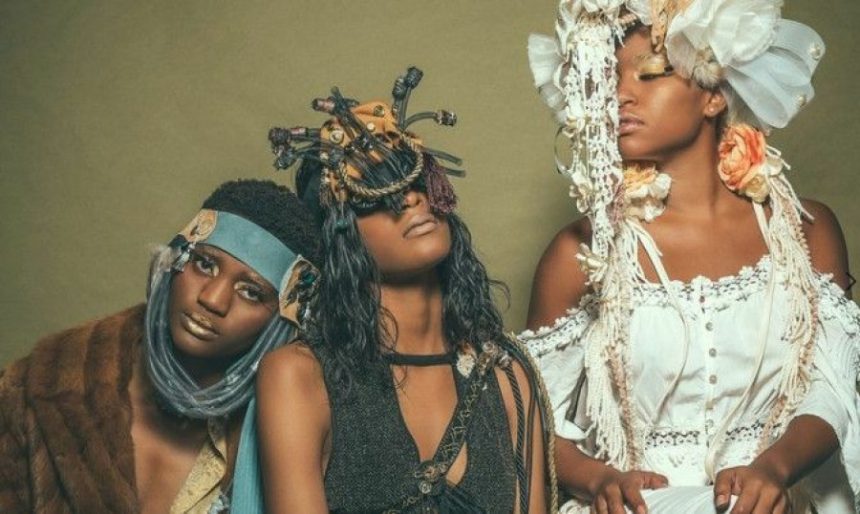
Something significant is happening in the space between fan engagement and professional craft. Across online communities dedicated to dark fantasy K-Pop aesthetics, a generation of makers has moved well beyond purchasing official merchandise or replicating existing looks. They are reading the visual and narrative logic of the performances they love, extracting the design principles that underpin them, and building original works of wearable art that extend those principles into new territory. The results are, in many cases, genuinely extraordinary.
What Fan Making Has Become
The popular image of fan costuming as a hobbyist pursuit involving hot glue and craft foam is significantly out of date. The community of makers engaged with dark fantasy K-Pop aesthetics includes professional-grade pattern cutters, textile artists with formal training, jewellers and metalworkers producing bespoke hardware, and wig artists whose work requires the same technical knowledge as theatrical wig making. Many of these makers run small businesses. Some have moved into professional costume production for performance companies and production houses.
What distinguishes the most accomplished makers in this community is not just technical skill, though it is often remarkable. It is a deep engagement with the source material’s conceptual and narrative dimensions. These makers are not simply reproducing what they see. They are interpreting it, drawing out themes and visual logics that may not be fully explicit in the original and building them into new forms.
Reading the Narrative Through the Costume
K-Pop Demon Hunters Costumes operate as visual narratives in their own right. The surface details of these costumes, the specific placement of hardware, the choice of colour relationships, and the way asymmetry is distributed across the silhouette all communicate information about the character’s history, allegiances, and capacities. The most attentive fan makers have developed the ability to read these visual narratives with considerable sophistication.
This reading practice produces a particular kind of creative output: costumes that extend the logic of the source material rather than simply reproducing it. A maker who has understood that a specific character’s costume consistently places visual weight on the left side to suggest a dominant weapon hand will apply that logic to a new design for a related character, maintaining the internal consistency of the visual world while introducing something genuinely new.
What the Makers Bring Back
The traffic between fan-making communities and professional performance costume production is increasingly bidirectional. Makers who have developed particular technical skills or material knowledge within fan communities are moving into professional contexts and bringing that knowledge with them. Production companies working in dark fantasy aesthetics are drawing on the experimental work in maker communities for ideas and technical solutions that established industry practice has yet to develop.
This cross-pollination is good for both directions of travel. Professional production benefits from the creative energy and technical innovation that maker communities generate. Maker communities benefit from the higher standards and greater resources that proximity to professional production brings. The boundary between fan making and professional costume production, never entirely fixed, is becoming increasingly permeable in ways that are enriching the visual culture of dark fantasy performance from both sides simultaneously.