



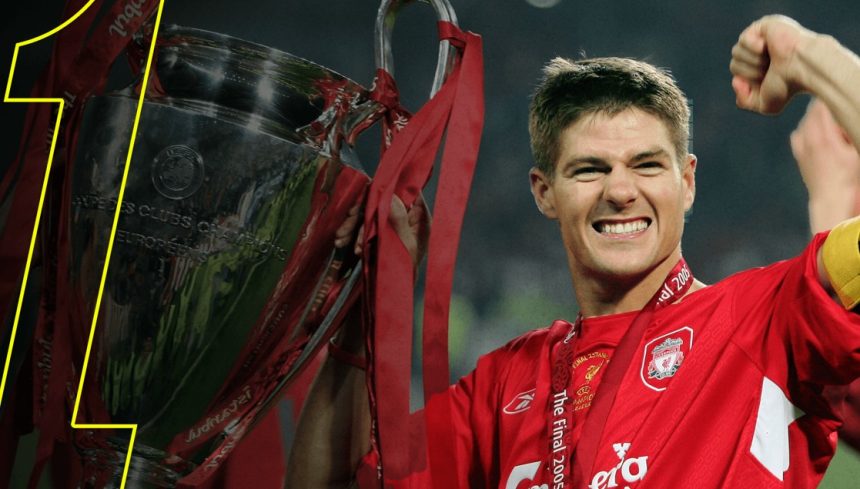
The 2005 Champions League final between Liverpool and AC Milan is usually remembered as a miracle, but rewatching it with a tactical lens shows a chain of decisions, structures and momentum shifts that you can recognise in many modern comebacks. Understanding what actually changed on the pitch—not just the scoreline—helps you read other big matches more clearly whenever you sit down to follow a full final or a high-stakes knockout tie.
Why This Final Feels So Different When You Watch the Full 90
Most people remember the night as a highlight reel of six goals and a penalty shootout, yet the full match reveals long phases of Milan’s control followed by a compressed window where Liverpool’s structural tweaks start to bite. In the first half, Milan’s midfield of Pirlo, Gattuso and Kaká dictated tempo and exploited the space between Liverpool’s lines, making the eventual 3–0 lead feel like a logical extension of those patterns rather than pure luck. Once you see that, the comeback looks less like a random burst of emotion and more like a case study in how one substitution, one formation shift and one goal can suddenly change which team’s strengths are being expressed on the pitch.
What Milan Were Doing So Well Before Half-Time
From the opening whistle, Milan’s 4-3-1-2 used Kaká between the lines to drag Liverpool’s midfield out of shape, while Pirlo controlled circulation from deep and Seedorf helped overload the left half-space. Their build-up repeatedly created clean central passing lanes, allowing Kaká to receive on the half-turn and slip runners like Shevchenko and Crespo into gaps behind a stretched back line. When you watch that half closely, the key is how rarely Liverpool manage to get tight to Kaká or disrupt Pirlo’s rhythm; that continuous access to dangerous zones is the cause, and the 3–0 scoreline by the break is the logical on-pitch outcome.
How Benítez’s Structural Changes Shifted the Match
At half-time, Rafael Benítez introduced Dietmar Hamann and effectively moved Liverpool towards a 3-4-2-1/3-5-2 hybrid, giving extra protection in front of the defence and freeing Gerrard to move higher. Hamann’s presence narrowed the space Kaká previously enjoyed, while the wing-backs and more aggressive advanced midfielders allowed Liverpool to contest second balls and sustain pressure instead of retreating after each failed attack. When you watch the second half from kick-off, you can see Milan’s passing lanes into the number 10 zone become less clean, which reduces their ability to break Liverpool’s new structure and gradually invites waves of red shirts forward.
Why Liverpool’s Shape Made Their Pressure More Repeatable
The new shape did not just add an extra body; it changed the angles of Liverpool’s pressing and support so that ดูบอลสดวันนี้ goaldaddy recoveries were more likely to lead to immediate attacking situations. With Gerrard stepping into advanced areas and Smicer drifting inside, Liverpool could flood the central channel around the box while still having width from full-backs and wing-backs, creating more viable passing options after each regain. The key for live viewers is to notice how often Liverpool start attacks with three or four players already ahead of the ball, which is a clear sign that structural support has improved rather than the team merely “trying harder”.
What the xG Story Tells You About Chance Quality
Expected goals models built after the fact show that Milan generated significantly more and better-quality chances overall, with estimates around 3.3 xG to Liverpool’s lower total, reflecting their dominance in clear opportunities. Many of Liverpool’s key moments—the long-range strike from Gerrard and Smicer’s shot from outside the area—carried relatively low individual xG values, underlining how unlikely it was for both to go in within such a short span. When you rewatch the game with that knowledge, the lesson is that comebacks often rely on a side outperforming their shot quality for a brief period, even when the underlying pattern of chances still favours the team that eventually loses.
How Live Viewing Changes Your Sense of “Momentum”
During ดูบอลสด of a match like this, it is easy to equate momentum with noise in the stadium or a single big tackle, but the Istanbul comeback shows that momentum is usually built on repeated structural advantages. After Liverpool’s first goal, you can track how often they recover second balls around Milan’s box, how quickly they re-enter the final third after losing possession, and how rarely Milan manage to counter in numbers compared with the first half. Over those 15–20 minutes, the balance of territory and pressure shifts dramatically, and that sustained tilt—not just one moment—is what turns a low-probability comeback into a plausible outcome that you can feel building from your seat or screen.
A Minute-by-Minute Viewing Checklist for the Second Half
Because the match is so emotionally loaded, having a simple checklist helps you stay focused on patterns instead of only reacting to goals. Before you start the second half, it is useful to define what you will look for in terms of spacing, pressing and chance quality so that each minute contributes to your understanding of how the comeback unfolds rather than just counting down to famous incidents.
- Watch the first five minutes after half-time for Liverpool’s new shape: note Hamann’s position and Gerrard’s freedom to push on.
- Track the five minutes around Liverpool’s first goal for changes in Milan’s passing accuracy and ability to find Kaká between the lines.
- Observe the period between the second and third goals for Liverpool’s success in winning second balls and preventing Milan from exiting their half.
Once you apply this sequence, the second half becomes less about three isolated goals and more about an extended stretch where Liverpool repeatedly force the game into zones that suit their new structure. You will see that Milan’s attempts to slow the tempo often fail because they no longer have uncontested access to the central spaces that made them so dangerous earlier, which is a pattern you can then look for in other matches where a trailing team changes shape and briefly takes control.
A Simple Table of Match Phases to Guide Your Rewatch
To keep track of how the game changes, it helps to break the final into clear phases with different tactical dynamics. The table below offers a basic framework you can hold in mind while you watch, focusing on where control lies and what each team is trying to do with and without the ball.
| Phase | Time period | Main tactical pattern | What to focus on while watching |
| Milan dominance | 0’–45′ | 4-3-1-2 exploiting space around Kaká | Gaps between Liverpool lines, Kaká’s freedom |
| Structural turnaround | 46’–60′ | Liverpool’s extra midfielder and higher Gerrard | Hamann’s positioning, second-ball pressure |
| Chaotic equilibrium | 61’–120′ + pens | Stretched game, both sides creating moments | Fatigue, decision-making, box defending |
Using this table during your rewatch turns vague ideas like “Milan were better early” or “Liverpool had belief” into specific, observable behaviours. You can see, for example, that Milan’s dominance phase is defined by clean progression through Pirlo and Kaká, while the structural turnaround hinges on Liverpool’s improved coverage of central zones and more aggressive support around the box. Later, the chaotic equilibrium phase shows how tired legs and pressure erode both teams’ structures, which is crucial for understanding why penalty shootouts often feel disconnected from the tactical story that came before.
Summary
Rewatching the Miracle of Istanbul with attention to structure, chance quality and game phases reveals a match that is far more instructive than a simple miracle narrative suggests. Milan’s first-half control, rooted in their 4-3-1-2 and the freedom given to Kaká, created a high xG platform that should normally decide a final, while Liverpool’s half-time switch and Hamann’s introduction reshaped central spaces and enabled a short burst of low-probability goals that turned the game on its head. If you carry those lessons into future finals or high-stakes matches, you will be better prepared to spot when a trailing side’s structural changes are genuinely shifting the state of the game, rather than simply hoping for another once-in-a-generation comeback.